


How Much Is Your Trademark Actually Worth?
If you ask most business owners what their trademark is worth, you’ll usually get one of two answers: “a lot” or “I have no idea.”
Both are understandable—and both are a problem.
Over the years, I’ve noticed something consistent: companies invest heavily in building their brand, but very few ever stop to quantify what they’ve actually created. The trademark sits there, doing its job—building trust, attracting customers, differentiating the business—yet financially, it often remains invisible.
That’s starting to change.
A Trademark Is Not Just Legal Protection
We tend to look at trademarks from a legal perspective: registration, protection, enforcement. All important, of course. But that’s only one layer.
A trademark is also:
- A revenue driver
- A negotiation tool
- A financial asset
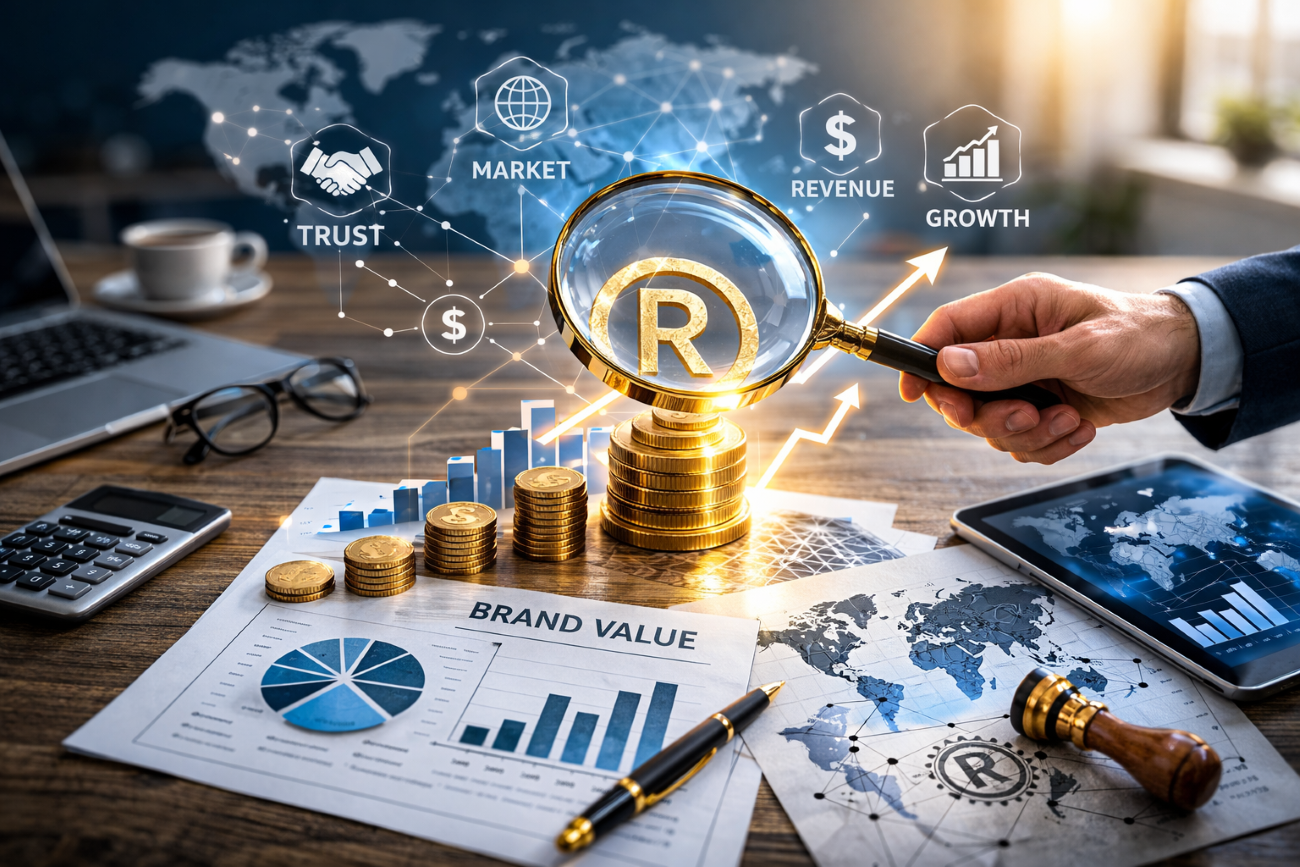
If your customers choose you over competitors because of your name, your reputation, or your brand identity—then your trademark is already generating economic value. The only question is: how much?
 Why This Question Matters More Than Ever
This isn’t just theory. I’ve seen firsthand how trademark value becomes critical in moments that actually matter:
- When a company is being sold
- When negotiating a licensing deal
- When investors ask what exactly they’re funding
- When enforcing rights and calculating damages
And increasingly, when companies try to use intellectual property as part of financing structures.
We are moving into a space where intangibles are no longer “nice to have” — they are the core of the business.
So… How Do You Value a Trademark?
There’s no single formula, and that’s where many people get stuck. But in practice, valuation usually follows three main approaches.
1. Looking at Future Income
This is the most practical way to think about it:
How much money does this trademark help generate over time?
A common method is the “royalty relief” approach—basically asking:
If I didn’t own this brand, how much would I have to pay to use it?
2. Looking at the Market
Here, you compare similar brands—what they were sold for, licensed for, or valued at.
The challenge? Good data is rare. But when available, it gives a useful reality check.
3. Looking at Cost
This one is simpler:
How much would it cost to build this brand from scratch?
It’s useful, especially for early-stage businesses—but it doesn’t fully capture what really matters: customer perception.
What Actually Drives Value
In my experience, valuation models are helpful—but the real insight comes from understanding what sits underneath them.
A trademark is more valuable when:
- It’s legally strong and well protected
- It has recognition in the market
- It’s clearly linked to revenue
- It’s protected across relevant markets
- It has room to grow
In other words, value comes from the intersection of law, market, and strategy.
Something Important Is Happening in Europe
This topic is finally getting the attention it deserves at an institutional level—and that’s a big shift.
The Slovenian Intellectual Property Office (SIPO) has become one of the first EU-based intellectual property offices to actively step into the discussion on IP valuation in a structured way.
That’s not a small detail.
Traditionally, IP offices have focused on registration and formal procedures. Now we’re seeing a move toward something more ambitious: helping businesses understand and use IP as an economic asset.
In June 2025, Slovenia hosted an international workshop dedicated specifically to this topic, bringing together policymakers, experts, and international organizations.
You can read more about it here.
To me, this signals a clear direction:
valuation is becoming part of the mainstream conversation—not just among lawyers, but across finance and policy as well.
Where This Is Going
We’re still early.
Valuing trademarks is not yet standardized. Banks are cautious. Methodologies vary. But the direction is clear:
- IP is becoming bankable
- Companies are thinking in terms of portfolios, not single trademarks
- Data and analytics will play a bigger role
- And valuation will become a routine part of business decision-making
Final Thought
If you’ve built a brand, you’ve already created value.
The real question is whether you understand it—and whether you’re using it.
Because once you start looking at your trademark not just as protection, but as an asset, your entire perspective changes.